










Are All Large Cranes Assembled the Same Way?
No, not all large cranes are assembled in the same way. Assembly depends on the type of crane, its configuration and the requirements of the planned work.
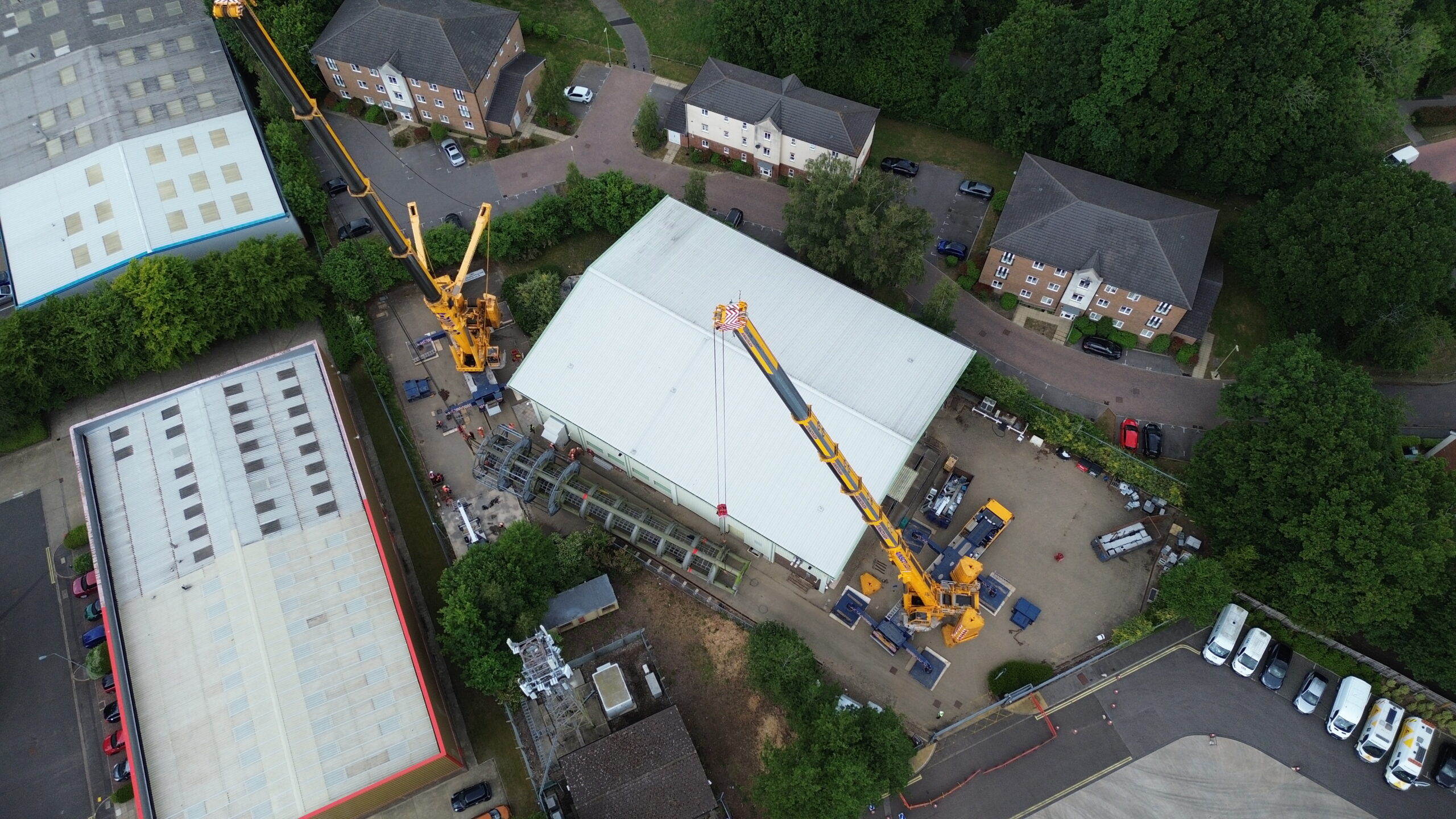
Heavy mobile cranes may arrive with the main crane already assembled, with items such as counterweights, boom sections or attachments delivered separately. Crawler cranes can require more substantial on-site assembly, with components delivered on several vehicles and a separate crane used during parts of the rigging process.
Conventional tower cranes are different again, as they’re built around a vertical mast structure. Mobile tower cranes are vehicle-mounted and self-erecting, so they require considerably less on-site assembly than a conventional tower crane.
Take a look at the different types available within the Ainscough crane fleet.
What Happens Before a Large Crane Is Erected?
Understanding how large construction cranes are assembled starts with the planning stage. Think about things like:
- The planned crane position
- Access route
- Lifting requirements
- Available setup area
- Transport arrangements
- Visible site conditions
- Nearby activity
- Weather conditions
Larger modular cranes may require several transport vehicles to deliver individual components. An assist crane or other planned assembly equipment may also be required to build the main crane into its working configuration.
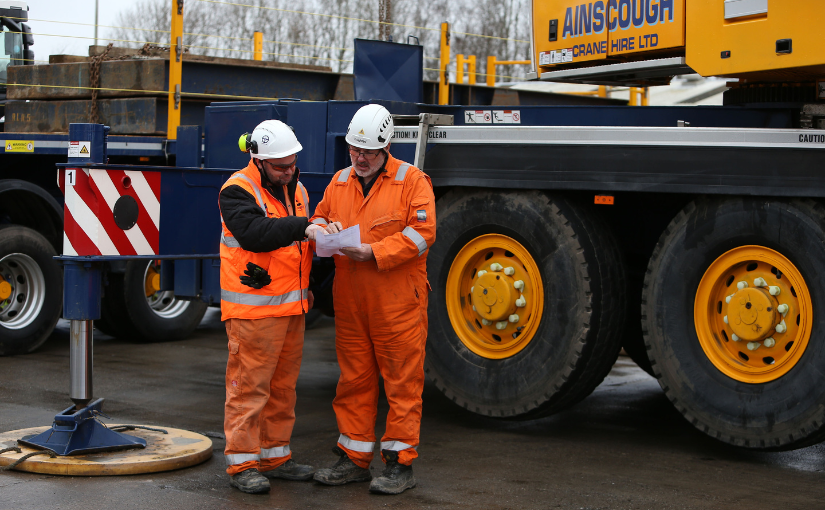
Ground responsibilities must also be clearly understood. Ainscough can provide relevant crane loading information within the agreed scope, while underlying ground capacity and temporary works remain subject to the client or Temporary Works Engineer arrangements.
Our guide to how to prepare your site for large crane hire covers some of these considerations in more detail.
How Are Large Mobile and Crawler Cranes Assembled?
The exact sequence varies between crane models and configurations, but a planned assembly can involve several key stages.
1. The Crane and Components Arrive on Site
The main crane is delivered to the agreed work area along with any separately transported components, such as counterweights, boom or lattice sections, hook blocks and other attachments.
Larger crawler cranes may need multiple deliveries because individual crane components are transported separately.
2. The Crane Is Positioned and Stabilised
The crane is moved into the planned assembly position before setup begins. Mobile cranes may use outriggers, while crawler cranes operate on tracks. Crawler tracks don’t remove the need for suitable ground conditions, however. The supporting surface still needs to be appropriately assessed for the planned crane loading.
3. Counterweights and Boom Components Are Fitted
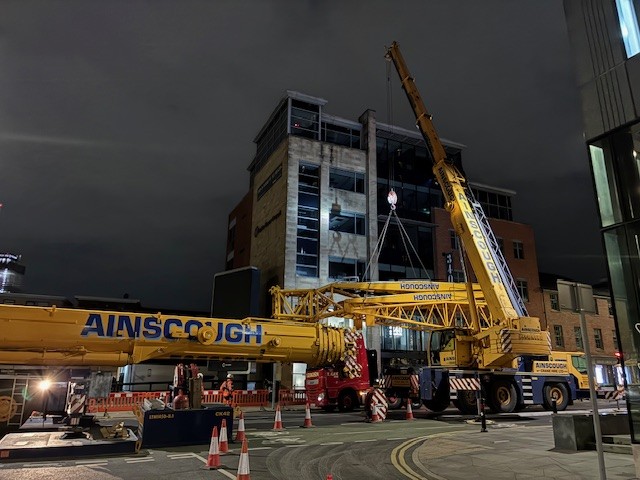
Counterweight and boom configuration depend on what the crane is going to lift. Components are installed in the required sequence, following the manufacturer’s instructions and the planned methodology. For larger modular cranes, an assist crane may be used to lift and position individual sections during assembly.
4. The Crane Is Configured for the Lift
Once the main structure has been assembled, the remaining configuration work can be completed. This may include fitting the required hook block, reeving and installing relevant attachments.
The detail varies significantly between crane models, so model-specific assembly should always follow the relevant manufacturer procedure.
5. Checks Are Completed Before Lifting
Before lifting begins, the crane needs to be confirmed as configured for the planned work. This can include safety device checks, limit switches, connections and other relevant crane functions. The crane operator and lifting team then work to the approved lifting documentation for the operation.
How Are Tower Cranes Erected?
Conventional tower cranes use a different erection process from mobile and crawler cranes.
Base, Support Arrangement and Initial Mast Sections
A conventional tower crane requires an engineered support arrangement. Depending on the crane, this may involve foundation anchors or a supporting base.
Where required, an assist crane can then be used to install the initial mast sections and other crane components.
Slewing Unit, Jib and Counter-Jib
The upper crane structure, jib, counter-jib and counterweights are installed in the planned sequence as the crane is assembled.
How Tower Cranes Grow Taller
Some tower cranes use a climbing system as construction progresses. Where this applies, the upper crane can be raised so that additional mast sections can be inserted.
This is not universal to every tower crane, so the process depends on the crane design and project requirements.
What About Mobile Tower Cranes?
Mobile tower cranes work differently. They are vehicle-mounted and self-erecting, reducing the amount of separate assembly required on site compared with a conventional tower crane.
What Safety Checks Are Needed During Crane Assembly?
Crane assembly needs to follow the planned methodology and relevant manufacturer instructions.
Considerations can include the controlled assembly area, crane position, visible site conditions, weather limits, component connections, safety devices and pre-use checks.
Where Ainscough is responsible for planning the lifting operation as part of its contract lift services, the agreed lifting documentation and responsibilities form part of that wider planning process.
How Are Large Cranes Dismantled and Removed?
Dismantling also depends on the crane type and configuration. For modular mobile and crawler cranes, relevant assembly stages are generally reversed so that components can be reduced to transportable configurations and removed from site.
Conventional tower cranes may use a climbing system to reduce their height where applicable, before the remaining components are removed using the planned dismantling method.
Planning a Large Crane Setup With Ainscough
Successful crane assembly is all about planning. Crane selection, access, transport requirements, available working space, site conditions and the intended lifting operation all influence how equipment can be delivered and prepared for work.
Our large crane hire guide provides further information on choosing equipment for higher-capacity lifting requirements.
If you’re planning a project involving a large crane, book a site survey or contact our team to discuss your lifting requirements.
Large Crane Assembly FAQs
How Long Does It Take To Assemble A Large Crane?
There is no universal assembly time for cranes. It depends on the type, size and configuration of the crane, along with the site conditions, access and transport logistics.
Do Large Cranes Need Another Crane To Assemble Them?
Some do. Larger modular cranes and certain tower crane erection stages can require an assist crane to lift and position components. Other cranes use different setup methods and may require a simpler assembly.
How Do Tower Cranes Get Taller As Buildings Rise?
Some tower cranes use a climbing system that raises the upper section of the crane so additional mast sections can be inserted. The exact process depends on the crane design.
Are Mobile Tower Cranes Assembled Differently?
Yes. Mobile tower cranes are vehicle-mounted and self-erecting, so they require much less on-site assembly than conventional tower cranes.